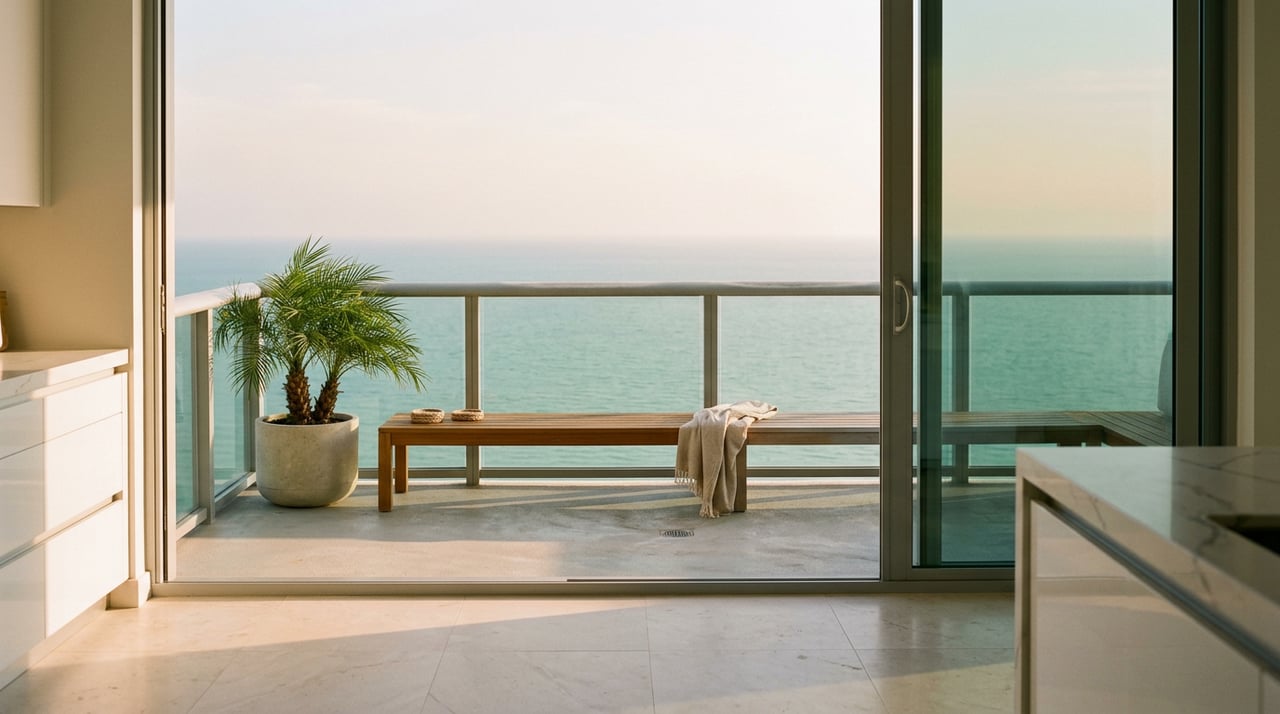
Same Zip Code, Six-Figure Gap: What Orange Beach Condos Actually Rent For
September 24, 2026
September 24, 2026
A client called me last spring with two listings pulled up side by side, both technically in Orange Beach, both quoted to her as solid rental investments. One was an older two-bedroom at Perdido Dunes. The other was a newer four-bedroom Gulf-front unit at Phoenix West II. She wanted to know why the online rental calculator she'd used gave her one number for "Orange Beach condos" when the actual projected income on these two units differed by more than $100,000 a year.
The honest answer is that the calculator wasn't wrong. It just wasn't answering the question she was asking. There is no such thing as a single Orange Beach rental market. There are dozens of buildings, each with its own age, floor plan mix, and view stack, and the income they produce has almost nothing to do with sharing a zip code.
Search for Orange Beach short-term rental income and you'll land on a handful of analytics platforms, each with a different headline figure. Rabbu's April 2026 data put average annual revenue across active listings at $57,519, with a 42 percent occupancy rate and an average daily rate of $191. Airbtics, looking at the twelve months through January 2026, reported a median revenue closer to $91,000 with 69 percent occupancy and a $355 average daily rate. Chalet's 2026 dataset landed in between, at a median of $89,622 with 48 percent occupancy and a $417 daily rate, noting that top-quartile operators saw closer to $112,996.
These aren't measuring different time periods or wildly different methodologies. They're measuring the same city and getting numbers that disagree by nearly 60 percent. That gap is the real story. It means "average Orange Beach rental income" is a blended figure covering everything from a 1985-built one-bedroom with no direct Gulf view to a brand-new four-bedroom penthouse, and the blend tells you almost nothing about what a specific unit will do.
Building age, bedroom count, and where the unit sits relative to the actual beach explain the spread far better than any citywide average. Look at how 2026 rental projections stack up across the towers I've worked in and around for years:
| Building | Unit Type | Vintage / Notes | Projected 2026 Annual Range |
|---|---|---|---|
| Perdido Dunes | 2BR | Older, non-Gulf-front stock | $22,000–$30,000 |
| Phoenix I & II | 1BR–3BR | Built 1985, 100 units each | $40,000–$60,000+ |
| Phoenix X | 1BR–3BR | Direct Gulf front, older vintage | $40,000–$80,000+ |
| Phoenix West | 3BR / 4BR | Established Gulf-front tower | $68,000–$145,000+ |
| Phoenix West II (The Oasis) | 3BR / 4BR | Built 2013, Gulf-front | $60,000–$160,000+ |
| Phoenix Gulf Towers | 2BR–4BR | Built 2023–2024, newest stock | $70,000–$135,000 |
Two things jump out. First, bedroom count matters as much as location. A three-bedroom in an older Phoenix tower can outperform a two-bedroom in a newer one simply because it sleeps more guests. Second, the newest construction doesn't automatically win. Phoenix Gulf Towers, built in 2023 and 2024, projects lower on its top end than Phoenix West II, a 2013 tower, because unit mix and true Gulf-front positioning still carry more weight than the year on the certificate of occupancy.
This is exactly why I've spent years tracking these buildings individually rather than trusting a market-wide average. Having worked presales across most of the Phoenix portfolio, from the original towers through Phoenix Gulf Towers, I've watched the same floor plan produce very different income depending on which building it sits in and which direction the balcony faces.
Projected ranges are useful for narrowing a search, but they're still projections. The real test is what a unit actually booked, and that number moves more than most buyers expect from one year to the next.
A three-bedroom at Turquoise Place posted $85,591 in gross rent through late September 2025, running around 51 percent paid occupancy. That same stack, in a different year, cleared $105,144.92 across 49 bookings with roughly 30 nights of owner use folded in. A three-bedroom at Phoenix West brought in $81,588 in 2023 at 81 percent occupancy, then $98,417 the following year from a corner unit in the same building. Go back further and you'll find a 2022 ledger from Phoenix West that spiked to roughly $147,655, a number that reflects an unusually strong booking year rather than a baseline anyone should underwrite against today.
None of these swings are random. Owner-use nights, how aggressively a unit is marketed across booking channels, and whether summer dates get locked in early all shift the outcome by tens of thousands of dollars within the exact same floor plan. A brochure projection tells you the ceiling and the floor. A real booking ledger tells you where a specific unit actually landed, and that's the document worth asking for before you write an offer.
Baldwin County's resort area, which covers Orange Beach and the southern stretch of Gulf Shores, posted an average residential sales price of $776,553 in August 2026, down from $829,364 the year before. At the same time, Rabbu's data showed active Orange Beach short-term rental listings up 82 percent year over year through April 2026. More units are competing for the same guest demand, and prices in the resort segment have eased rather than climbed.
That combination changes the calculus for a buyer. When condo prices are rising fast, almost any Gulf-front purchase looks defensible on the theory that appreciation will cover a mediocre rental year. When prices are flat to softer and supply is growing, the building and unit you choose has to earn its keep on income alone. Choosing a Phoenix West II four-bedroom over a comparable-looking unit in an older, more rent-restricted building isn't a preference at that point. It's the difference between a property that services its own carrying costs and one that doesn't.
A few questions separate a real diligence process from a guess based on a citywide average:
None of this replaces a conversation with someone who has actually watched these buildings perform over multiple seasons. But it's the minimum standard for treating a six-figure purchase like the individual asset it is, rather than a line item in someone else's average.
The next time a rental calculator hands you a single number for "Orange Beach condos," treat it as a starting point, not an answer. The building you're actually considering, its age, its floor plan, and where it sits relative to the water will tell you more about your real income potential than any citywide average ever will.
If you're comparing specific towers and want to see how a particular floor plan has actually performed, I've spent close to two decades tracking this market from the inside, including direct presale work across most of the Phoenix portfolio. Vince Burchfield can walk you through the real numbers behind the listing. Let's Connect.
Stay up to date on the latest real estate trends.
Get assistance in determining current property value, crafting a competitive offer, writing and negotiating a contract, and much more. Contact me today to discuss all your real estate needs!