Gulf Shores Has Two Housing Markets, and the Line Between Them Runs Along Canal Road
August 27, 2026
August 27, 2026
Picture two people who both listed a house in Gulf Shores this summer, both watched it sit longer than they hoped, and both pulled up the same Baldwin County housing report in July to see how the market was doing. One reads that average prices in their area jumped nearly $72,000 in a year and feels vindicated for holding firm on price. The other reads that average prices in their area dropped by almost $100,000 and starts wondering if they waited too long. Neither one is wrong about what the report says. They are just reading about two different markets, and most sellers in Gulf Shores have no idea which one their address actually belongs to.
That split is not a metaphor. Baldwin REALTORS, the trade association that runs the county's MLS, reports Gulf Shores real estate under two separate categories, and the dividing line runs through the city itself.
The July 2026 Baldwin County housing report, covered by Gulf Coast Media, showed what looks at first like a contradiction. In the Resort Area, average residential sales price climbed to $836,017, up from $764,005 in July 2025. That is a nearly $72,000 increase. But average days on market in that same segment rose to 122 days, up from 104 a year earlier, and closed sales fell from 210 properties to 175.
In the Traditional Residential category, the story flipped. Average sales price fell to $398,711, down from $495,085 the year before, a drop of nearly $100,000. Yet homes in that segment moved faster, with average days on market dropping to 78 from 83, even as closed sales also declined, from 804 down to 619.
Prices up while speed and volume slow. Prices down while speed holds steady. Read as one county-wide market, that looks like noise. Read correctly, it is two markets behaving in ways that make complete sense once you know where the line between them falls, and that line runs straight through Gulf Shores.
Baldwin REALTORS' Resort Area classification covers all of Orange Beach, all of Fort Morgan, and the portion of Gulf Shores south of Canal Road and AL-180. Everything else in the city, the stretch north toward Craft Farms and the rest of inland Gulf Shores, gets reported as Traditional Residential alongside towns like Robertsdale and Bay Minette.
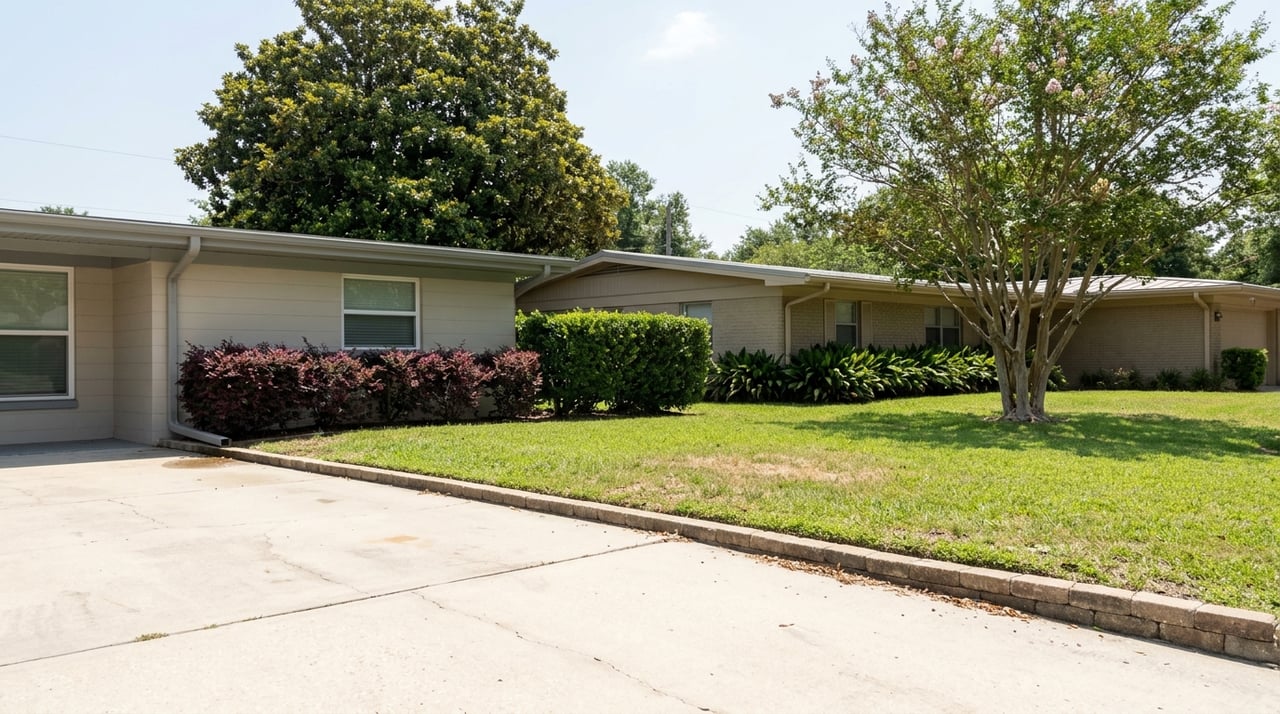
Orange Beach sits entirely inside the Resort Area. So does Fort Morgan. Gulf Shores is the one city in this equation that straddles the boundary, which means it is also the one city where two neighborhoods a few minutes apart can show up in two completely different market reports. A canal-front home near West Beach or the Fort Morgan corridor gets compared against Orange Beach's Gulf-front high-rises and Perdido Pass estates. A home in Craft Farms, ten minutes north, gets compared against inland Baldwin County subdivisions that have nothing to do with beach access, rental income, or flood zones.
There is even a subdivision named for the exact road that draws the line. Canal Division sits along west Canal Road inside Gulf Shores city limits, a collection of homes on the Intracoastal Waterway or directly across from it. If you own there, you cannot assume which side of the report you fall on just by knowing your street name. The boundary is precise enough to matter and unclear enough that most owners never check it.
Here is what that boundary produced in July 2026:
| Resort Area | Traditional Residential | |
|---|---|---|
| Avg. sales price | $836,017 (up from $764,005) | $398,711 (down from $495,085) |
| Avg. days on market | 122 (up from 104) | 78 (down from 83) |
| Closed sales | 175 (down from 210) | 619 (down from 804) |
| New listings | 263 (down from 313) | 730 (down from 788) |
A rising average price with falling sales volume and slower turnover is not a market getting hotter. It is a market getting thinner at the bottom and top-heavy at the close. Fewer buyers transacted in the Resort Area this July than last, 175 versus 210, and fewer new listings came on, 263 versus 313. When the pool of closed sales shrinks and skews toward higher-end product, the average price rises even if no individual property gained a dollar of value. A single Gulf-front closing in the multimillion-dollar range can move that average more than a dozen mid-market sales would.
That matters for anyone selling a mid-market home south of Canal Road right now. The headline number says the area is up nearly $72,000 on average. Your specific home did not necessarily move with it. What the 122-day average time on market tells you is closer to the truth: buyers are still out there, but they are pickier and slower, and the properties that are closing tend to be the ones that stand out on price, condition, or location within that segment.
The Traditional Residential numbers tell a mirror-image story. Average price fell by nearly $100,000 year over year, yet days on market improved and the properties that did sell moved faster than they did in 2025. Closed sales dropped more sharply here in percentage terms, from 804 down to 619, than they did in the Resort Area.
That combination points to the same compositional effect working in the other direction. Fewer higher-priced inland homes closed this July, which pulled the average down, while the homes that did transact, likely priced realistically for what inland Gulf Shores buyers are willing to pay right now, moved off the market efficiently. A falling average here does not automatically mean falling values on any single street in Craft Farms or the neighborhoods around it. It means the mix of what changed hands this month skewed toward more modestly priced product, and those sellers priced well enough to move quickly.
There is a second layer to this that makes year-over-year comparisons even trickier right now. Baldwin REALTORS recently transitioned to a new MLS platform and, according to their own reporting notes, shifted market area definitions to what they describe as objective geographic boundaries, replacing the legacy MLS designations used in prior years. That means the exact line dividing Resort Area from Traditional Residential in today's reports may not be drawn in precisely the same place it was when last year's numbers were recorded.
In practical terms, some of the year-over-year swings in this month's report may reflect a redrawn map as much as they reflect a changing market. That is not a reason to distrust the data. It is a reason to treat the trend direction, price up here, price down there, volume thinning across the board, as more reliable than the exact dollar gap between the two years.
If your address sits anywhere near Canal Road, AL-180, or the corridor connecting West Beach to the rest of the city, do not take a county-wide headline at face value. A few steps make the difference between pricing off a real comp set and pricing off a number that describes a different neighborhood entirely.
How do I find out which market area my Gulf Shores address falls under? Ask your agent to check the property's MLS area coding directly rather than relying on the old shorthand of north or south of Canal Road. Since the association shifted to objective geographic boundaries this year, that old rule of thumb is no longer a safe assumption on its own.
Does this affect what an appraiser says my home is worth? Appraisers build their own comp sets rather than relying on the MLS area labels used in public market reports, but in a segment where closed sales are as thin as the Resort Area was in July, the same limited pool of transactions can influence both the public report and the appraisal. Knowing which sales are genuinely comparable to your property matters either way.
Does this mean the coastal side of Gulf Shores is doing better than the inland side? Not exactly, and that is the point. The coastal side is outperforming on average price and underperforming on speed and volume. The inland side is the reverse. Calling one side simply "better" misses what the numbers are actually showing.
I have spent two decades working both sides of that line, from Gulf-front towers to inland Gulf Shores neighborhoods, and I have watched sellers on both sides misread a headline number more times than I can count. If you are trying to figure out where your specific property actually sits in this market, I would rather walk through your comps with you than let a county-wide average do the talking. Vince Burchfield is a phone call away. Let's Connect.
Stay up to date on the latest real estate trends.
Get assistance in determining current property value, crafting a competitive offer, writing and negotiating a contract, and much more. Contact me today to discuss all your real estate needs!